
EN | IT | DE

Cart

Close

No products in the shopping cart.

Embedded software development and maintenance

DAVE Embedded Systems provides advanced embedded software development services designed to seamlessly integrate with the hardware of its System‑on‑Modules and Single Board Computers. Software development is a strategic pillar of the company and has grown over the years to include the creation of ToloMEO, a comprehensive suite of software services that can be integrated into any DAVE embedded platform.

The software team specializes in developing Board Support Packages (BSPs), drivers, low‑level services and middleware, supporting operating systems such as Linux, Android and RTOS. This expertise enables the delivery of robust, optimized and secure software architectures tailored to industrial, medical, automotive and IoT applications. DAVE ensures long‑term maintainability, high performance and security across the entire software stack.

With ToloMEO, customers gain access to advanced software modules for IoT, Machine Learning, Industrial Blockchain, Cybersecurity and Embedded Device Management. This platform enables full edge‑to‑cloud integration, including OTA updates, remote monitoring and central device administration, ensuring operational reliability even in demanding environments.

Through a transparent co‑design approach and tight integration with hardware development, DAVE ensures that each software solution aligns perfectly with customer requirements and supports the entire product lifecycle—from design and validation to long‑term maintenance.

Board Support Package development and maintenance

The DESK (DAVE Embedded Software Kit) BSPs form the official software foundation that DAVE Embedded Systems provides for its System‑on‑Modules and Single Board Computers. Their maintenance is a continuous and structured activity aimed at ensuring customers a stable, updated environment aligned with silicon vendor developments.

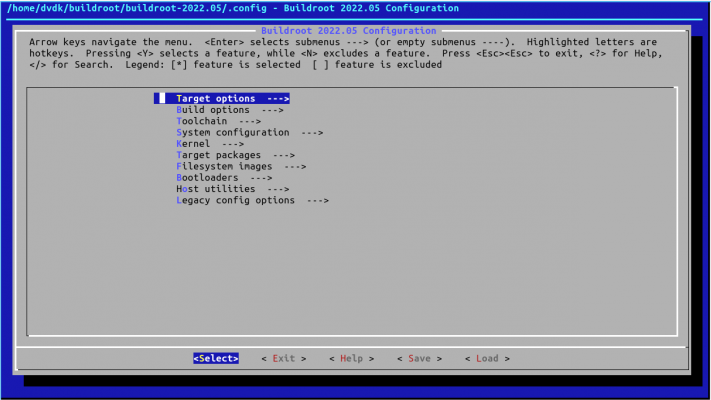
Each DESK release is based on the official BSP provided by the SoC vendor (e.g., NXP). DAVE then adds specific customizations required to fully support its hardware, modifying bootloader, Linux kernel, device drivers and the Yocto BSP. This guarantees full compatibility with DAVE platforms and includes maintaining core components such as pre‑built root file systems, development tools and ready‑to‑use images.

Maintenance activities include:

  • Periodic updates that integrate new kernel versions, security patches, driver improvements and bootloader updates.
  • Alignment with NXP BSP releases, as demonstrated by DESK‑MX9‑L using rel_imx_6.1.55_2.2.0 as its base.
  • Dedicated Git repositories for registered users, enabling access to U‑Boot, Linux kernel and Yocto BSP updates and customizations.
  • Yocto BSP maintenance, including complete instructions for generating system images, SDKs and toolchains.
  • Detailed release notes documenting known issues, limitations, new features and updated components for each DESK release (e.g., 5.1.0, 5.2.0).

This long‑term strategy ensures that DAVE customers receive a reliable, up‑to‑date and fully supported software ecosystem—fundamental for industrial, medical and mission‑critical applications with extended lifecycles.

Get a quote

ToloMEO Board Support Package

The ToloMEO BSP is the dedicated software distribution enabling ToloMEO functionalities on edge devices. Once installed on DAVE Embedded Systems hardware, it partially or fully supports ToloMEO modules depending on the available device resources. Maintaining the ToloMEO BSP is a continuous process aimed at ensuring stability, security updates, seamless cloud integration and ongoing feature enhancements.

DAVE regularly updates the ToloMEO BSP to:

  • improve integration with the IoT, Machine Learning, Blockchain, Cybersecurity and Embedded Device Manager modules
  • ensure secure IoT connectivity and remote management of distributed edge fleets
  • maintain compatibility with all DAVE SOM‑based hardware, providing a customized software distribution per platform
  • support essential features such as OTA updates, device lifecycle management and advanced security aligned with IEC 62443 (within the Security module)

The ToloMEO BSP is therefore maintained as a key element of the ToloMEO ecosystem, ensuring a secure, scalable and reliable edge‑to‑cloud software foundation.

Get a quote

Hardware-in-the-loop phylosophy

Hardware‑in‑the‑Loop (HIL) – Testing and Validation for Embedded Systems

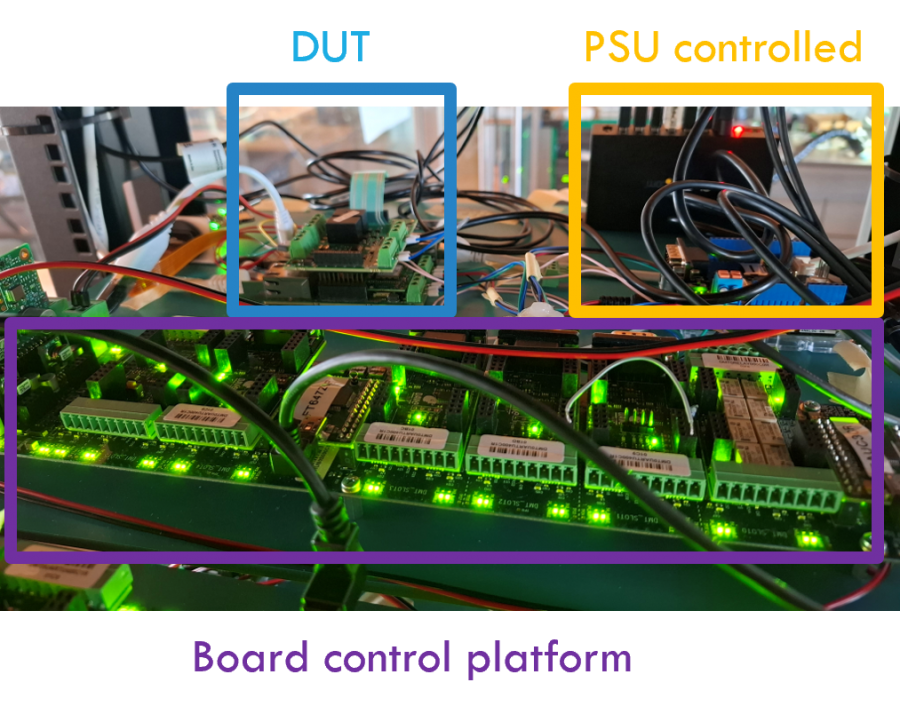
Hardware‑in‑the‑Loop (HIL) is an advanced testing technique used to validate complex embedded systems by connecting real hardware to a real‑time simulation of the physical environment. When safety, cost or feasibility constraints limit real‑world testing, HIL provides accurate plant simulation while preserving real I/O interactions over analog, digital and communication protocols such as CAN, Ethernet or TCP/UDP.

HIL enables engineers to validate control algorithms, system responses and edge‑case scenarios under controlled, repeatable and automated test conditions. Modern HIL systems also support hardware fault insertion, enabling tests of open circuits, short‑to‑ground faults and sensor/actuator anomalies to verify robustness in failure conditions.

Its importance has grown in industries like automotive, aerospace and IoT, where environmental simulation—motion, vibration, temperature, complex input profiles—is essential but costly or dangerous to reproduce physically. HIL accelerates development, improves reliability and reduces expensive field‑testing cycles by providing real‑time closed‑loop testing before the entire system is available.

DAVE Embedded Systems can integrate HIL approaches into its validation workflows, leveraging strong expertise in BSP management (DESK, ToloMEO), real‑time interfaces and robust embedded architectures.

Get a quote

Video

Download